The G7 and gender equality
Wisskirchen, Alma / Sören HilbrichExternal Publications (2025)
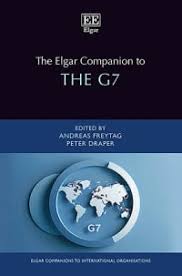
in: Andreas Freytag / Peter Draper (Hrsg.), The Elgar Companion to the G7, Cheltenham: Edward Elgar, 201–214
ISBN: 978-1-03-530210-9
DOI: https://doi.org/10.4337/9781035302116.00020
Information
Since the 1990s, the G7 has increasingly addressed gender equality in its political declarations. Treating gender equality initially as a challenge to be tackled mainly abroad, the group later acknowledged the need for change in its member countries too. In addition, over the years the G7 shifted from focusing on economic inclusion of women as a means to increase economic growth to considering gender equality as a goal in itself, to be addressed in other policy fields also. To what extent this changing approach to gender equality in the G7's declarations has influenced policy changes within G7 countries and abroad is hard to assess. In principle, the G7 has the potential to exercise two functions with respect to gender equality. First, the G7 might coordinate group members’ national policies and the activities of international organisations in this area. However, given the democratic deficits of the G7, it is questionable whether it is desirable for the group to exercise this function, especially since it does not seem necessary for the effectiveness of gender equality policies that these policies are internationally coordinated. Second, the G7 could serve as a forum for the transnational exchange of experiences and ideas.
About the IDOS author

Further IDOS experts
-
Christ, Simone
Social Anthropology
-
Dippel, Beatrice
Comparatist
-
Gehrke, Charlotte
Social Sciences
-
Goedeking, Nicholas
Comparative Political Economy
-
Haug, Sebastian
Political Science
-
Herrfahrdt-Pähle, Elke
Economist
-
Jaji, Rose
Anthropology
-
Kachelmann, Matthias
Political Science
-
Li, Hangwei
Political Science
-
Novoselova, Anna
Political Science
-
Nowack, Daniel
Political Science
-
Olekseyuk, Zoryana
Economy
-
Roll, Michael
Sociology
-
Sowa, Alina
Economics
-
Stewart, Benjamin
Social Science
-
Stöcker, Alexander
Economics
-
Volz, Ulrich
Economist
-
Wehrmann, Dorothea
Sociology
-
Wingens, Christopher
Political Science
-
Zintl, Tina
Political Scientist