Three functions
The Academy fulfils three closely interrelated functions:
- Foster dialogue and mutual understanding: an intensive platform for exchange among people with diverse professional, institutional and societal backgrounds, who encounter different perspectives on shared, intercontinental challenges and possible responses.
- Build the foundations for cooperation: a ‘lab of cooperation’ where participants develop relationships and build trust across differences, laying the groundwork for future cooperation within the Shaping Futures Network and beyond.
- Strengthen transformative competences: knowledge, skills and attitudes that enable participants to contribute to sustainability transformations and act as leaders and agents of change in their own contexts.
Three pillars
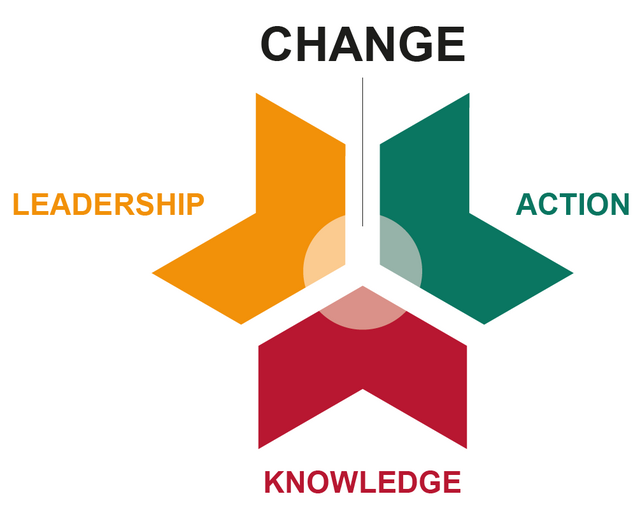
The Shaping Futures Academy is grounded in three pillars that together enable participants to contribute to sustainability transformations.
- Knowledge: Participants share and acquire knowledge on transformation processes and the dynamics that shape them. They strengthen their analytical capabilities by developing three distinct but connected competences: systems thinking, critical thinking and futures thinking. They also gain new knowledge from diverse scientific and practice-oriented stakeholders in expert dialogues and site visits.
- Action: Integrated into the knowledge pillar, the action pillar lets participants apply what they learn. In small groups, they work on specific transformation challenges and so develop and apply these competences.
- Leadership: This pillar focuses on individual and collective leadership skills. Participants reflect on their own position and agency in sustainability transformations. The new and strengthened competences support their professional development, which is rewarding for them individually and directly benefits their home institutions.
Learning approach
The programme follows a holistic, systemic and constructivist approach to learning, drawing on transformative and problem-oriented learning. It uses a range of interactive, application-oriented methods, including site visits, dialogues with international experts, workshops, group work and sessions moderated by participants themselves. The Academy works on the premise that learning is not passive but requires open, active engagement. Through collaborative peer learning, participants exchange different perspectives, hone their critical thinking and develop shared values.