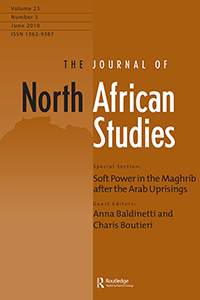
Decentralisation in Morocco: a solution to the "Arab Spring"?
Houdret, Annabelle / Astrid HarnischExternal Publications (2018)
in: Journal of North African Studies 24 (6), 935-960
DOI: https://doi.org/10.1080/13629387.2018.1457958
Volltext/Document
After 2011, several Arab states initiated decentralisation reforms to address the demonstrators’ demands for more participative governance and more efficient public services. Taking Morocco’s new decentralisation reform as a case in point, this article assesses the requirements for, and impediments to, progress. It discovers that the reform articulates important democratic principles and formally opens new spaces of action that may facilitate more efficient and participative governance. However, historical legacies of centralised control, few opportunities for participation, low institutional capacities and weak accountability, and also unclear regulations within the reform, are still hindering effective decentralisation. The potentially positive impact of current reforms on political liberalisation is thus uncertain. Recent uprisings in the Rif region are symptomatic of the neglect of regional inequalities and grievances, and of related dissatisfaction. They also illustrate that increased regional autonomy can only alleviate the structural problems in the longer term and when thoroughly implemented.
About the IDOS author

Further IDOS experts
-
Baumann, Max-Otto
Political Science
-
Breuer, Anita
Political Scientist
-
El-Haddad, Amirah
Economy
-
Fasold, Maximilian
Political Economy
-
Fiedler, Charlotte
Political Scientist
-
Gutheil, Lena
Cultural Anthropology
-
Hackenesch, Christine
Political Science
-
Haldenwang, Christian von
Political Science
-
Herrfahrdt-Pähle, Elke
Economist
-
Leininger, Julia
Political Scientist
-
Li, Hangwei
Political Science
-
Lorch, Jasmin
Political Science
-
Morare, Ditebogo Modiegi
Political Science
-
Mross, Karina
Political Science
-
Möschl, Tim
Governance
-
Nowack, Daniel
Political Science
-
Okechukwu, Nneka
Public International Law
-
Roll, Michael
Sociology
-
Sinanoglu, Semuhi
Political Science
-
Wagner, Niklas
Climate & Knowledge Sociology
-
Wehrmann, Dorothea
Sociology
-
Wingens, Christopher
Political Science