
"Transgressive" mobility and the structuring of space and belonging
Jaji, RoseExternal Publications (2026)
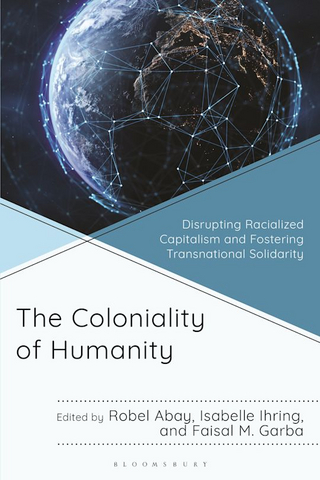
in: Robel Abay / Isabelle Ihring / Faisal M. Garba (Hrsg.), The coloniality of humanity: disrupting racialized capitalism and fostering transnational solidarity, New York: Blooomsbury , 25-40
One of the hallmarks of colonization was transplantation of the European nation-state to the colonies in line with colonialism’s consideration of sedentarism as indispensable to its ‘civilization’ by domination mission. The structuring of space and belonging around the Eurocentric notion of nationhood and statehood became the vehicle through which populations in the colonized parts of the world were reconfigured as insiders and outsiders as well as legal and illegal among other designations. This chapter addresses the Eurocentric configuration of space around the nation-state, its reproduction in the colony and post-colony and the implications for contemporary global mobility. Building on Michel Foucault’s (1986) heterotopic spaces and Freerk Boedeltje’s (2012) discussion of the structuring of space around the ‘normal’/‘deviant’ binary, the chapter argues that this dichotomous dissection of space inscribes varied texts on mobile bodies and creates hierarchies that bestow varied identities and differential mobility opportunities on people who inhabit different spaces. The Eurocentric structuring of space construes mobility as anomalous and straining the hyphen in nation-state through its disruption of the order created around sedentarism and spatial demarcation of belonging. The chapter highlights how the nation-state attaches belonging to space in ways that restrain mobility particularly by ‘othered’ bodies from ‘deviant’ spaces. It illustrates its main argument by discussing the tethering of belonging to space exemplified by physical and legal barriers buttressed by securitizing discourses that seek to deter presumably transgressive mobilities’ ‘encroachment’ into spaces where they are ostensibly anomalous.
About the IDOS author

Further IDOS experts
-
Abedtalas, Musallam
Economics
-
Christ, Simone
Social Anthropology
-
Ekoh, Susan S.
Environmental Research
-
Flaig, Merlin
Social Science
-
Kuhnt, Jana
Development Economist
-
Martin-Shields, Charles
Political Science
-
Putz, Lena-Marie
Peace and Conflict Research