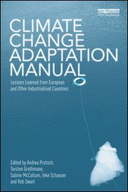
Swart, Rob / Johann Alberth / Birgit Kuna / Marianne Lillieskold / Marketa Hanzlickova / Britta Horstmann / Anna Rovisco (2014) Externe Publikationen
Horstmann, Britta / Birgit Kuna / Marianne Lillieskold / Pieter Pauw / Rob Swart (2014) Mitarbeiter sonstige
Horstmann, Britta (2014) Externe Publikationen
Bonn, 25. Juni 2014
The sharpening Asian competition over energy resources, especially in the South and East China Seas, has obscured another danger: water shortages in much of Asia are becoming a threat to rapid economic modernization and peace. Water has emerged as a key security issue that could determine if Asia is headed toward cooperation or…
Bonn, 16. Juni 2014
In what kind of world do we want to live? What future do we want for our children? These questions, which are leading the global debate on a new development agenda, were discussed in the international conference “Education is the Key – Towards a Global Post-2015 Agenda for Sustainable Development”. It was held on 16 June 2014 in the…
Janus, Heiner / Stephan Klingebiel / Sebastian Paulo (2014) Briefing Paper 6/2014
Currently, it is not clear what will replace traditional aid. Observers often speak about a beyond aid future. As an umbrella term, beyond aid describes different aspects of the transformation of development cooperation.
Gehrke, Esther (2014) Externe Publikationen
Berman, Thijs / Bengt Braun / Margret Jay / Filip Kacmarek / Louka Katseli / Simon Maxwell / Dirk Messner / Ana Palacio / Laurence Tubiana / Kevin Watkins (2014) Externe Publikationen
Stepping, Katharina M.K. (2014) Briefing Paper 5/2014
Environmental indicators provide crucial information about the state of the environment. Yet, the availability and quality of data remain poor in a large number of countries. Integrating environmental goals and targets in the post-2015 agenda requires efforts for data gathering and processing.
Chaudhary, Ankur (2014) Discussion Paper 15/2014
As the global transportation sector moves towards developing & deploying electromobility technologies, Indian automakers have also embarked on transition. This paper highlights the charecteristics of this emerging technology trajectory focusing on the trends as well as the underlying determinants.
Development leaders call for the EU to think and act globally Development leaders call for the EU to think and act globally Press Release, 6 May 2014 The Independent Vision Group on European Development Cooperation calls for a stronger global role of the European Union (EU), especially in its relations with the developing world. The Independent Vision Group on European Development Cooperation worries, that Europe is so preoccupied with its own economic and social…
Lindenberg, Nannette (2014) Mitarbeiter sonstige
Pauw, Pieter (2014) Externe Publikationen
Schamp, Eike W. (2014) Discussion Paper 12/2014
Low carbon policies have initiated a new race for hybrid and battery electric propulsion technologies for vehicles. Forming a new technological trajectory that will become sustainable is a societal process. What can we learn from France, Europe’s current leader in electromobility?
Bonn, 13. März 2014
Rationale for the workshop To the present day, a predominantly negative understanding of migration in the context of climatic and environmental change has prevailed. Migration has often been portrayed as a threat for human national and international security in policy fora or in media’s representation of the topic. Despite this fact,…
Yamineva, Yulia (2014) Discussion Paper 7/2014
Is the Intergovernmental Panel on Climate Change an effective science-policy institution? How is it governed? Have recent reforms after error-finding improved the workings of the Panel? What are strengths and weaknesses of the IPCC model? This discussion paper sheds light on these questions.
Bonn, 12. März 2014
Existing development pathways need to be transformed so that they are more environmentally sustainable and socially inclusive. These two agendas can be synergistic or conflicting. Synergies have been explored to some extent in recent concepts such as the ‘green economy’, while the associated trade-offs and conflicts have received less…
Bonn, 11. März 2014
The notion of Common But Differentiated Responsibilities (CBDR) is a cornerstone of international climate policy. It essentially acknowledges that individual countries’ contributions to global warming are often at odds with the climate change impacts they will be facing while at the same time there exist considerable differences in…
Berlin, 11. März 2014
If we are to prevent dangerous anthropogenic interference with the climate system and to preserve humanity's life support systems for future generations, we need a radical transformation in the way we use our planet's natural resources. The market is failing to bring about the necessary changes and its incentive structures even caused the…
Pauw, Pieter / Steffen Bauer / Carmen Richerzhagen / Clara Brandi / Hanna Schmole (2014) Discussion Paper 6/2014
This paper discusses options on how the international climate regime under the UNFCCC can move forward with one of its fundamental yet often disputed principles: Common But Differentiated Responsibility (CBDR).