Boelens, Rutgerd / Jaime Dinge Hoogesteger-van-Dijk / Jean Carlo Rodríguez de Francisco (2014) Externe Publikationen
Paris, 19. Mai 2014
Today development partners are under strong pressure to demonstrate the results achieved through development co-operation. Results-based funding is one major attempt to respond to this pressure by reshaping the delivery instruments and relationships between development partners. Results-based funding (such as results based aid, program…
Bonn, 19. Mai 2014
The international conference in Bonn on 19/20 May 2014 aimed to identify research and funding gaps to influence Nexus policy-making and research on a global level. It brought together policy makers, scientists and other stakeholders to discuss the linkages across three key resource sectors – water, energy and food. Participants addressed…
Development leaders call for the EU to think and act globally Development leaders call for the EU to think and act globally Press Release, 6 May 2014 The Independent Vision Group on European Development Cooperation calls for a stronger global role of the European Union (EU), especially in its relations with the developing world. The Independent Vision Group on European Development Cooperation worries, that Europe is so preoccupied with its own economic and social…
Mexico City, 16. April 2014
First High-Level Meeting of the Global Partnership for Effective Development Co-operation The event covered mainly two aspects of the topic in the following two sections. 1. The first section focused on “Mutual Accountability and South-South Cooperation in the Post-2015 Agenda”. In the post-2015 debate, global accountability features…
Duisburg, 15. April 2014
In the 8th Käte Hamburger Lecture, Andrew Cooper examined the rise of pivotal informal summitry/organisations, above all the G20 and the BRICS, and the implications of this phenomenon for global governance. At a basic level informal organisations differ from the formal institutions such as the UN and the IMF in a number of key ways:…
Bonn, 15. April 2014
Social protection has significantly gained prominence in the international development debate. It is a key tool for the eradication of poverty, for the reduction of vulnerability and for the limitation of rising income inequality. Apart from this, however, social protection also has an economic and a political function: Its pure existence…
Bonn, 07. April 2014
This was the final conference of an international research project " Technological trajectories for low carbon development in China, Europe and India ", generously funded by the Swedish Riksbankens Jubileumsfond under a joint call with Volkswagen Foundation and Compagnia de San Paolo. The project was jointly carried out by a team of 15…
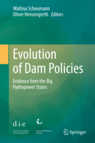
Scheumann, Waltina / Oliver Hensengerth (eds.) (2014) Buchveröffentlichungen
Bonn, 20. März 2014
At this Water Lecture, a panel of high-level experts from International Organizations, Policy think tanks and the academia discussed the various links between water and energy as well as potential challenges and opportunities of the interface between water and energy at different levels and settings. The emphasis of this panel discussion…
Bonn, 14. März 2014
In September 2013, the United Nations decided to only have “one single framework and set of goals” for international development after 2015. A single framework means that the ambitions for human development and the environment of the Millennium and the Sustainable Development Goals need to be integrated in order to achieve a coherent…
Bonn, 13. März 2014
Rationale for the workshop To the present day, a predominantly negative understanding of migration in the context of climatic and environmental change has prevailed. Migration has often been portrayed as a threat for human national and international security in policy fora or in media’s representation of the topic. Despite this fact,…
Bonn, 12. März 2014
Existing development pathways need to be transformed so that they are more environmentally sustainable and socially inclusive. These two agendas can be synergistic or conflicting. Synergies have been explored to some extent in recent concepts such as the ‘green economy’, while the associated trade-offs and conflicts have received less…
Rivers offer a huge potential for the generation of ‘clean’ electricity through hydropower development. But are the environmental impacts of dams really that small and does public interest in the name of renewable energy sources justify expropriation of local populations? In Turkey, these questions lead to heated debates– in midst of…
Bonn, 11. März 2014
The notion of Common But Differentiated Responsibilities (CBDR) is a cornerstone of international climate policy. It essentially acknowledges that individual countries’ contributions to global warming are often at odds with the climate change impacts they will be facing while at the same time there exist considerable differences in…
Berlin, 11. März 2014
It is widely recognised that the foreign aid system - which today involves every country in the world - is in need of drastic change. But there are conflicting opinions as to what is needed. Some call for dramatic increases in resources, to meet long-overdue commitments, and to scale up what is already being done around the world. Others…
If we are to prevent dangerous anthropogenic interference with the climate system and to preserve humanity's life support systems for future generations, we need a radical transformation in the way we use our planet's natural resources. The market is failing to bring about the necessary changes and its incentive structures even caused the…
Bruxelles, 06. März 2014
In 2014, negotiations for a Post-2015 global agenda will gain momentum. The Intergovernmental Open Working Group (OWG) established by the UN in 2013 will start elaborating a proposal which integrates work on the Sustainable Development Goals as decided by the UN Conference on Sustainable Development in Rio de Janeiro in 2012 and…
Berlin, 04. März 2014
Germany’s energy transition is high on the political agenda. However, the so-called “Energiewende” still has a long way to go if it is to become a global model for low-carbon transformation. What is expected from the German “Energiewende”? Is energy transition primarily a technical or a sociopolitical challenge? And how can the…
Lütkenhorst, Wilfried / Anna Pegels (2014) Die aktuelle Kolumne, 24. Februar 2014
24.02.2014. Die deutsche Energiewende ist der weltweit einzigartige Versuch, eine reife und große Industriegesellschaft auch ohne Nuklearenergie zukunftsfähig zu machen.