The founding mandate of IDOS was the Postgraduate Programme (since 2024: Postgraduate Programme for Sustainability Cooperation – PGP), which has been preparing young professionals for specialist and leadership roles in international cooperation for more than 60 years now.
To mark the institute’s 60th anniversary, IDOS commissioned a tracer study, which for the first time systematically examines the capacity development and career paths of around 1,000 alumni.
The online survey of all the cohorts from 1965 to 2023 reached around 800 former participants. The high response rate of 46 per cent and the fact that alumni from all the cohorts participated in the survey indicate a high level of identification with the programme.
Competencies for the changing field of international cooperation
The results confirm the valuable contribution made by the PGP to promoting young talent and at the same time provide input on how it can be refined. The 2024 reforms have made the programme more diverse, international and partner-centred, introduced new admission criteria and established a grant model.
International cooperation, sustainability and socio-ecological transformation remain key topics in addressing global problems. At the same time, disruption and crises continue to pose huge challenges in this area of work – on both a professional and a personal level. In addition to sectoral expertise, social and personal skills are thus becoming increasingly important. Experts and managers need to undergo targeted training to prepare them for their roles.

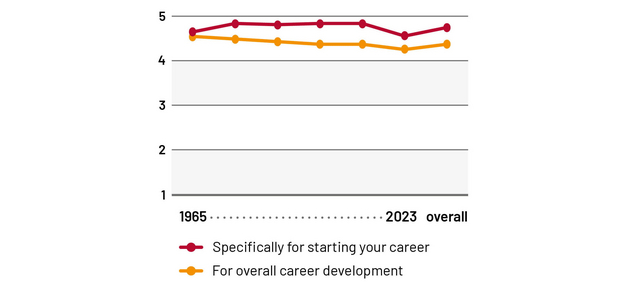
Recommendation to others: 93 per cent of alumni would recommend the PGP to others – clear evidence of the programme’s effectiveness.
Starting a career: 96 per cent rate the PGP as (very) positive for starting their career, while 76 per cent had an unreservedly positive view of the programme.
Leadership responsibility: The share of PGP graduates in leadership positions increases as they gain professional experience: around 20 per cent have leadership roles with decision-making powers directly after graduating, 50 per cent five years later, and 75 per cent after ten years.
Impact on professional development: 93 per cent rated the impact of the PGP on their career path as somewhat or very positive – and this figure was consistent across all cohorts.
Start and course of career among alumni
The BMZ, KfW Development Bank and GIZ (and its predecessor organisations) in particular have played a key role for early-career graduates over the past 60 years. The second most common area of work in which PGP graduates find their first job (16 per cent) is advice and consulting.
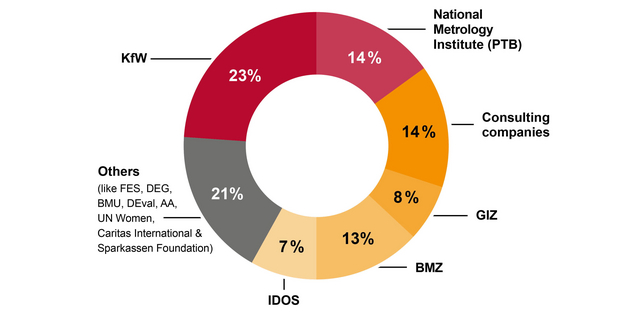
In the course of their career, many PGP graduates work for ministries, international organisations, foundations and research institutes. Five years after completing the programme, around 50 per cent of the graduates work at the BMZ, GIZ or KfW. Overall, about 20 per cent have worked for the BMZ during the course of their career or were still working there at the time of the survey. Five years after completing the programme, a clear majority of the graduates still work in the field of development cooperation/international cooperation or related fields. Only 8 per cent of all the graduates in employment were working in sectors other than international cooperation at the time of the survey.
Impact of the PGP on developing knowledge, skills and competencies
The diagram shows the percentage of alumni who rate the programme as having had a (very) large impact on developing their skills in the following areas:
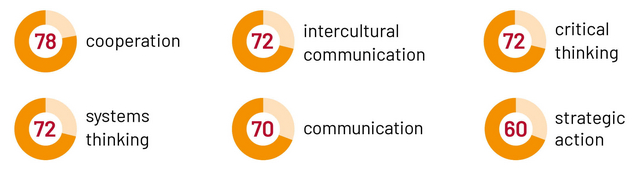
Across all the cohorts, the PGP particularly strengthens competencies connected with cooperation: for 78 per cent of the graduates, the programme was (somewhat or very) useful in this area. Even though it needs to be taken into account that the competencies required for international cooperation change over time, the PGP has consistently focused on strengthening competencies connected with cooperation, intercultural cooperation, critical thinking, systems thinking, communication and strategic action over the 60-year period.
Socio-demographic characteristics
The gender balance among the graduates surveyed is broadly even, although it has shifted significantly in favour of women, who have been in the majority in recent years.
The proportion of first-generation graduates stands at 40% and has been declining over time (27% in the most recent cohort). The clear majority (86%) are the first in their family to work in the field of development cooperation and internationalisation.
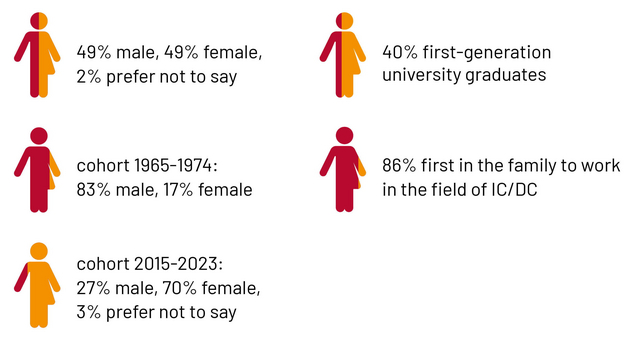

Around half of the graduates placed their parents in the highest levels of a social ladder, and 20 per cent in the lowest levels. The subjective assessment of participants’ socio-economic family background has risen over time.
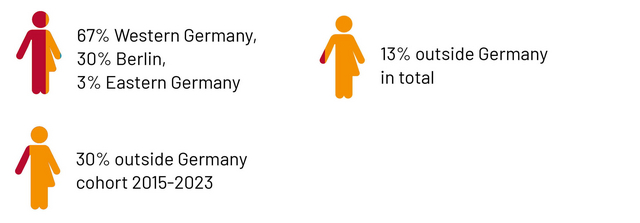
The majority of the participants had been living either in Berlin or in Western Germany before they took part in the PGP, while only few had been living in what used to be East Germany. The share of graduates who lived abroad before joining the programme has risen considerably: they account for a third in the most recent cohort.