Bonn, 12. März 2014
Existing development pathways need to be transformed so that they are more environmentally sustainable and socially inclusive. These two agendas can be synergistic or conflicting. Synergies have been explored to some extent in recent concepts such as the ‘green economy’, while the associated trade-offs and conflicts have received less…
Tokyo, 09. April 2019
In recent decades, the global economy has grown ever faster. This is mainly due to the fact that the global economy is becoming increasingly integrated. However, the global trading system that has supported this growth and the process of economic integration is showing increasing signs of stress. In the face of growing challenges, the…
Bonn, 05. Juni 2015
The German Development Institute / Deutsches Institut für Entwicklungspolitik (DIE) organised and took part in a series of events at and around the Bonn Climate Change Conference in June 2015. The main focus of the events was on an emerging groundswell of climate actions by cities, regions, companies and other groups, and their…
Fues, Thomas / Dirk Messner (2016) Briefing Paper 9/2016
Eight years after its formation, the Group of 20 (G20) has consolidated its status as the power centre of global economic governance. In light of pressing challenges G20 leaders need to act as guardians of global well-being by supporting implementation of the 2030 Agenda for Sustainable Development.
Fues, Thomas (2005) Briefing Paper 1/2005
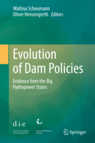
Scheumann, Waltina / Oliver Hensengerth (eds.) (2014) Buchveröffentlichungen
Bonn, 16. Oktober 2019
The digital revolution has changed human interaction significantly since the launching of the first personal computer end of the 1970s and the first smartphone in 1996. Today, even in African LDCs, most people have access to a mobile phone, 80% of the world population are using the internet. Around 25 billion devices globally are…
Bonn, 18. Mai 2009
The first Hans Singer Memorial Lecture by Paul Collier on “Hans Singer’s legacy: The problem of commodity exporters revisited” took place on 18 May 2009 in Bonn. Hans Singer combined in high measure three roles that today are seldom found together. He was, of course, a researcher: it is his most celebrated research that will be the…
Haug, Sebastian (2022) Externe Publikationen
The ‘Global South’ has become a popular meta category in the practice and study of world politics. Exploiting its analytical potential, Sebastian Haug argues, requires explicit engagement with definitions, meanings and the implications of taken-for-granted framings.
Haug, Sebastian (2021) Externe Publikationen
Müller, Claudia (2009) Briefing Paper 14/2009
Brandi, Clara / Axel Berger (2014) Mitarbeiter sonstige
Fues, Thomas / Youfa Liu (eds.) (2011) Studies 62
Bonn, 20. Juni 2017
In July 2017, leaders of the G20 nations gathered in Hamburg, Germany, for their annual summit, discussing matters of international cooperation among the world’s most powerful economies. Since the summit fell during a period of heightened international turbulence, the outcome and ambition of the G20 process under Germany’s leadership were…
Bonn, 23. September 2025
In an increasingly globalized world, displacement, migration, and (im)mobility are a socio-political phenomenon that countries must respond and adapt to. Displacement, both cross-border and internal, presents unique challenges for communities hosting displaced people, particularly given how fraught the politics of displacement can be.…
Loewe, Markus (2021) Externe Publikationen
Brüntrup, Michael (2023) Externe Publikationen
The world is currently experiencing a historic food crisis. High fertiliser prices are part of the problem. In addition to the necessary short-term aid measures, the crisis ought to be made use of to develop and implement longer-term fertiliser strategies for sustainable, in particular smallholder increases in production in the Global South.
Messner, Dirk (2016) Externe Publikationen
Lakner, Christoph / Mario Negre / Espen Beer Prydz (2014) Externe Publikationen
Malerba, Daniele (2022) Discussion Paper 6/2022
Energy transitions and policies that incentivize it (such as carbon pricing and subsidy reforms) can increase poverty and inequality through higher prices and job disruptions. Using social protection mechanism can reverse these negative effects and make climate mitigation more politically feasible.