Beyond 2030 - The future of global Sustainability
As the target year of the 2030 Agenda draws closer and progress in most areas continues to fall far short of expectations, discussions about a possible follow-up framework are gaining momentum. Against this backdrop, the German Institute of Development and Sustainability (IDOS) sees a clear need for structured exchange to capture current positions, identify areas of convergence and divergence, and assess the political feasibility of different Beyond-2030 pathways.
Read more

Strengthening global health
How can global health be strengthened in the coming years? On the one hand, it is a matter of preventing pandemics and epidemics in the future. On the other hand, health systems must become more resilient.

Disruption and Reform
In light of global crises and increasingly disruptive, authoritarian forms of politics, forward-looking, cooperative reforms are necessary to secure sustainable development, international cooperation and democratic foundations. In this web special you will find IDOS's work on the dynamics of our 2025/26 annual theme, ‘Disruption and Reform’.
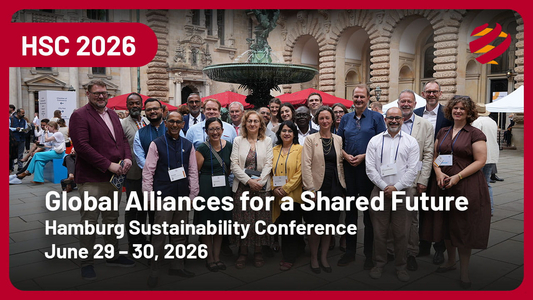
Video: Beyond 2030: Forging Alliances for the Future of Global Sustainability | HSC 2026 | Day 2
Blog: Reflections from Bonn’s Mid-Year Climate Talks: Implementation, Trade, and Missed Synergies
Video: Zambian Bureaucratic Practices in Chinese Financed Digital Projects
Our expertise on the Middle East and North Africa (Mena) as well as on other topics
Opinion pieces and media contributions
What the ICJ's climate ruling means in a fracturing global order
The Advisory Opinion should not be understood as a substitute for international climate diplomacy but as a welcome addition to its toolbox.
Read moreWhat to Play Next: Development after the End of Development
The University of Manchester’s Global Development Institute convened researchers in mid-April to ask: is the era of Development over? Heiner Janus and Michael Roll think that the window for reinvention may be wider than the rhetoric of crisis suggests.
Read moreEvents
Bonn, 03.12.2026 until 04.12.2026
Current publications

Agricultural import bans in Botswana: evaluating macroeconomic trade-offs and SACU revenue implications amid criticism of ‘Bad Economics’
Tamasiga, Phemelo / El houssin Ouassou / Lascar Makumi Wambu / Helen OnyeakaExternal Publications (2025)
published on publicpolicyafrica.org (Public Policy in Africa Initiative)
Botswana has been pursuing both fiscal sustainability and diversification to address the structural vulnerabilities stemming from its heavy reliance on diamond revenues. Diamonds contribute approximately 80% of the nation’s export earnings, nearly one-third of fiscal revenues. While these revenues have underpinned Botswana’s historical economic success, such dependence amplifies fiscal risks, particularly in global market fluctuations. The government also derives significant income from the Southern African Customs Union (SACU), the world’s longest-standing customs union. Revenue-sharing from SACU’s Common Revenue Pool (CRP)—comprising customs duties, excise taxes, and development allocations—contributes 30–40% of annual government income (SACU Fact Sheet). However, reliance on these two revenue streams raises questions about the state’s medium-to-long-term fiscal resilience. To mitigate such risks, Botswana has initiated efforts to diversify its economy by promoting tourism, agriculture, and technology. Nevertheless, the pace of diversification remains insufficient to offset the potential volatility in diamond and SACU revenues. Economic policy reforms geared towards strengthening non-resource sectors and enhancing domestic revenue mobilization are imperative to reduce the country’s fiscal vulnerabilities and ensure sustainable growth (IMF, 2023).
Newsletter
Sign up here for our monthly newsletter and stay informed about all the important news from the German Institute of Development and Sustainability (IDOS). The newsletter provides you with information on new publications, research projects, events and job vacancies.
IDOS-Newsletter June / Juli 2026
Subscribe now