Can 'biased' mediators be helpful? Four decades in the Southern Philippines (1971-2008)
Hernandez, Ariel MacaspacExterne Publikationen (2019)
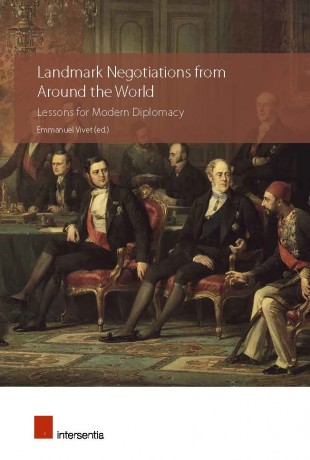
in: Emmanuel Vivet (ed.), Landmark negotiations from around the world: lessons for modern diplomacy, Paris: Intersentia, 359-368
ISBN: 978-1-78068-851-0
Information
In the Southern Philippines, the final sprint of the half-a-century long peace process, called the Bangsamoro peace process reminds us that the “devil is in the details.” After more than four decades of talks, despite numerous mediated negotiations, framework agreements, final agreements, plebiscites/referendums, creation of autonomous governance bodies and implementation of peace agreements, the closure of the Bangsamoro Peace Process is still to come. The Bangsamoro peace process is a mediated negotiation process which was helped by Libya and Malaysia, both holding a political mandate from the Organisation of Islamic Conference (OIC). These two countries were useful at creating channels of negotiations between the GRP and the Moro rebel groups. However, the Libyan and Malaysian mediation efforts contradict the dominant literature on mediation with regards to neutrality and impartiality, as these are considered as necessary elements of successful third-party mediation . The analysis of the mediation efforts of Libya and Malaysia between 1971 and 2008 suggests that biased mediators can still be successful in helping parties to elusive conflicts reach agreements. In the case of the Bangsamoro peace process, it can even be argued that the bias of mediators was instrumental in pushing forward the process.
Über den IDOS-Autor

Weitere IDOS-Expert*innen zu diesem Thema
-
Bergmann, Julian
Politikwissenschaft
-
Burchi, Francesco
Entwicklungsökonomie
-
Erforth, Benedikt
Politikwissenschaft
-
Fiedler, Charlotte
Politikwissenschaftlerin
-
Furness, Mark
Politikwissenschaft
-
Kuhnt, Jana
Entwicklungsökonomin
-
Leininger, Julia
Politikwissenschaftlerin
-
Loewe, Markus
Ökonomie
-
Lorch, Jasmin
Politikwissenschaft
-
Martin-Shields, Charles
Politikwissenschaftler
-
Mross, Karina
Politikwissenschaftlerin
-
Strupat, Christoph
Ökonom